
 English
Views: 0 Author: Rebecca | Senior FF&E Procurement Specialist Publish Time: 2026-08-21 Origin: Site


Office chair total cost of ownership is rarely the same as the chair's sticker price. A low-cost task chair may look attractive in an initial quote, but its lifecycle cost can rise when replacement, repair, delivery, disposal, internal labour and employee disruption are included.
For most standard commercial offices, a mid-range task chair often provides the best balance of purchase price, adjustability, repairability and expected service life. However, that outcome depends on the chair model, use intensity, warranty coverage, spare-parts availability and the organisation's expected holding period.
A $200 chair can be appropriate for temporary areas, visitor seating or short-term projects. A $600 commercial chair may offer better value for daily workstation use if it has replaceable components and a clear warranty. A $1,200 spec-grade chair can make sense for long-hold offices, intensive use, executive settings or users who need advanced adjustability.
This guide compares $200, $600 and $1,200 task-chair categories over an eight-year planning period. It explains what actually drives task chair TCO and how procurement teams can evaluate seating based on lifecycle value rather than only acquisition cost.
Model note: The cost examples below are illustrative planning scenarios, not universal market results. Actual chair TCO varies by model, shift pattern, user weight, floor surface, purchase quantity, warranty terms, labour costs, repair availability, freight and disposal requirements.
Office chair total cost of ownership includes purchase price, freight, installation, repairs, replacement cycles, disposal, internal labour, warranty recovery and residual value.
The $600 commercial task-chair tier often provides a strong balance of upfront cost, repairability and expected service life for an eight-year planning horizon.
Entry-level chairs can be suitable for low-use or short-term environments, but limited spare parts and short warranties may increase replacement risk in daily commercial use.
Premium task chairs can provide advanced adjustability, longer parts support and stronger warranty options, but higher acquisition costs may not pay back during a short office lease.
The most common service items include casters, gas cylinders, arm pads, upholstery and tilt mechanisms.
Model-specific ANSI/BIFMA X5.1 evidence, a published parts catalogue and component-level warranty coverage are more useful procurement indicators than a brand logo alone.
An ergonomic chair supports workstation fit, but it does not independently prevent injuries or guarantee productivity gains.
For many daily-use commercial workstations, a $600 task chair may offer the strongest balance of initial price, repairability, comfort features and expected service life over an eight-year period.
However, the correct answer depends on your project:
| Chair Tier | Best Fit | Main TCO Risk |
$200 entry-level chair | Short leases, training rooms, visitors and low-use seating | Limited parts, shorter warranty and earlier replacement |
$600 commercial chair | Standard daily workstations and general office use | Requires confirmation of model-specific warranty and spare parts |
$1,200 spec-grade chair | Long-hold offices, intensive use, executive settings and advanced ergonomic needs | Higher upfront cost may not pay back during a short holding period |
The goal is not to buy the highest-priced chair. The goal is to buy a chair that matches its expected workload, user population, maintenance plan and lifecycle budget.

Total cost of ownership measures what a chair costs throughout its useful life, not only what it costs on purchase day.
Chair TCO=Purchase Price+Freight+Installation+Repairs+Replacement Cost+Disposal+Internal Labour−Warranty Recovery−Residual ValueChair TCO=Purchase Price+Freight+Installation+Repairs+Replacement Cost+Disposal+Internal Labour−Warranty Recovery−Residual Value
| Cost Element | What It Covers | Why It Matters |
Acquisition | Chair purchase price, supplier margin and order quantity | The most visible cost, but not the only cost |
Freight | Domestic or international transport, insurance and handling | Can vary by route, packaging and quantity |
Installation | Assembly, placement, asset tagging and ergonomic setup | May require internal facilities labour or an installer |
Repairs | Casters, cylinders, arm pads, upholstery and mechanisms | Serviceable chairs may have lower replacement costs |
Replacement | New chair cost when repair is not practical | Often higher for low-cost chairs with no parts support |
Disposal | Removal, recycling, landfill fees or donation processing | Can be significant in large replacement programmes |
Internal labour | Procurement, receiving, assembly, moving and asset tracking | Usually missed in low-price comparisons |
Warranty recovery | Covered parts, labour or replacement support | Depends on warranty scope and usage conditions |
Residual value | Resale, reuse, refurbishment or internal redeployment | Often higher for durable contract furniture |
Procurement principle: If two chairs have similar purchase prices but one has a 10-year component warranty, a parts catalogue and reusable serial-number tracking, it may have a lower lifecycle risk than the other.
Price alone does not define chair quality. Nevertheless, pricing often reflects differences in adjustment range, material quality, parts availability, warranty coverage and service support.
| Attribute | Tier 1: $200 Entry-Level | Tier 2: $600 Commercial | Tier 3: $1,200 Spec-Grade |
Typical sales channel | Retail, e-commerce and basic office suppliers | Contract furniture dealers and commercial suppliers | Contract dealers and architecture-specified projects |
Common use | Low-use, short-term or visitor seating | Daily office workstations | Intensive workstations, executive and long-hold projects |
Adjustments | Usually height, sometimes basic tilt | Commonly seat depth, lumbar, arm adjustment and synchro tilt | May include advanced lumbar, headrest, additional arm and tilt settings |
Frame and base | Often plastic-forward with selected metal components | Reinforced commercial construction | Premium metal or aluminium construction with higher-spec components |
Warranty | Often shorter and more limited | Typically longer, often split by component | May offer long-term component support and enhanced service options |
Spare parts | May be difficult to source | Usually available for major wear components | Often includes a broader parts catalogue |
Expected service approach | Replace more often when failures occur | Repair wear components and keep chair in service | Repair, refurbish and retain for a longer holding period |
Important: These are planning categories, not product guarantees. A well-built $200 chair may outperform a poorly designed $600 chair. Buyers should evaluate the exact model, not only its price band.
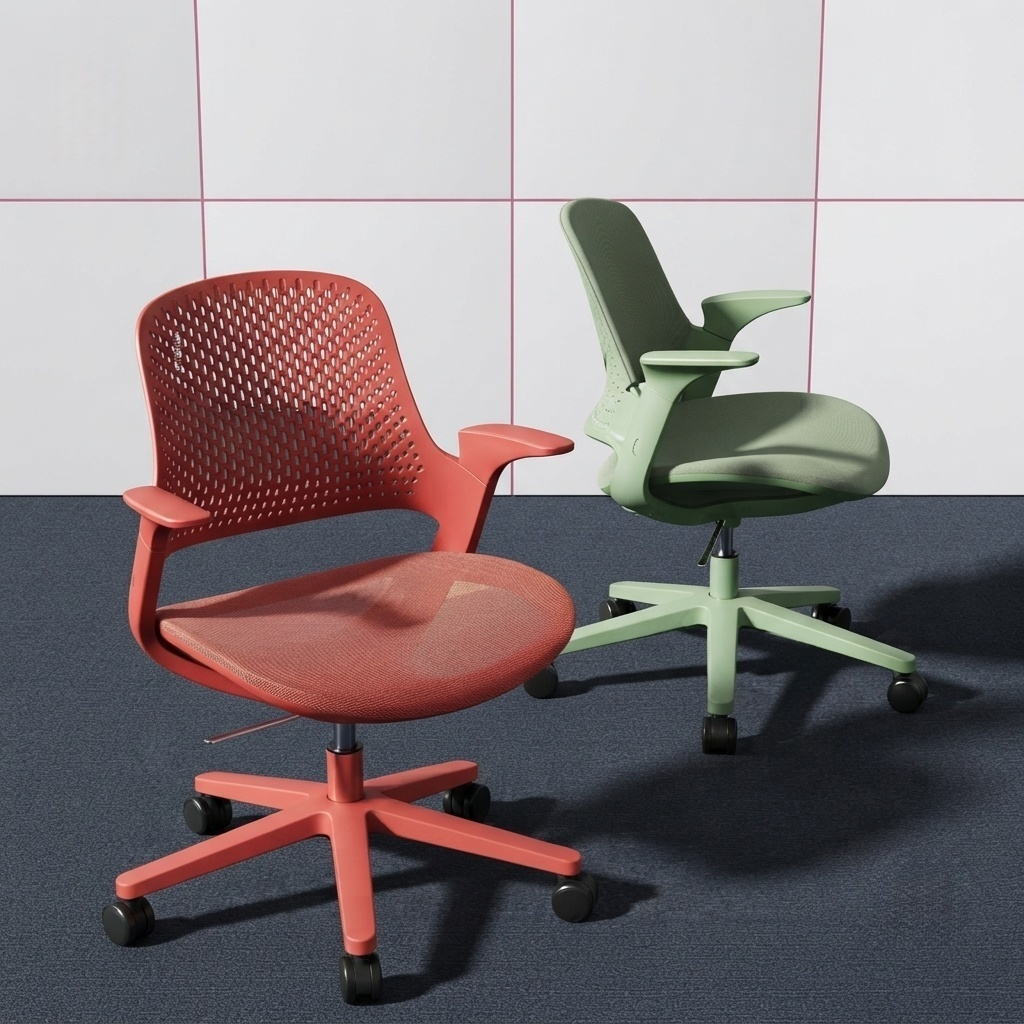
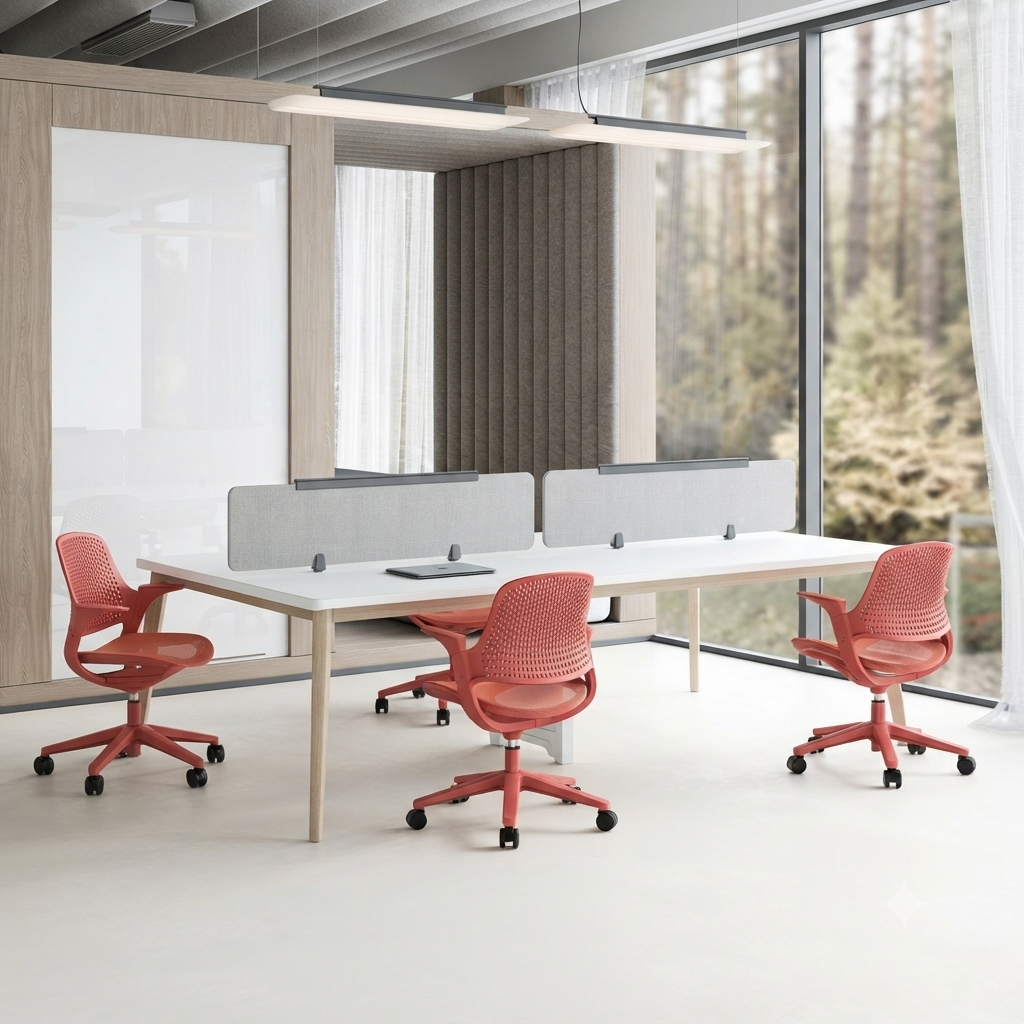
Ergonomic Task Chair Breathable Mesh Office Seating
The following model compares 100 chairs under assumed single-shift, eight-hour commercial use. It assumes fixed purchase prices, basic local repair access, one employee per chair and no major office relocation.
Illustrative model only: Actual results vary by chair configuration, maintenance practice, local repair labour, warranty coverage, user behaviour, shift pattern and procurement route.
| Cost Line Over 8 Years, Per Chair | Tier 1: $200 | Tier 2: $600 | Tier 3: $1,200 |
Initial acquisition | $200 | $600 | $1,200 |
Expected replacement allowance | $200–$400 | $0–$150 | $0–$100 |
Repair and parts allowance | $20–$100 | $75–$175 | $75–$200 |
Delivery, internal labour and disposal | $75–$150 | $35–$100 | $35–$100 |
Potential warranty recovery | Limited or model-dependent | May offset covered components | May offset covered components and service |
Illustrative 8-year TCO | $495–$850 | $710–$1,025 | $1,310–$1,600 |
This model does not prove that one tier is always cheaper. It shows why initial price is insufficient for comparison.
A $200 chair may have a low TCO if it remains in low-use service and does not require frequent replacement. A $600 chair can offer better value when it remains in service for the full planning horizon and its common wear components can be repaired. A $1,200 chair may become more competitive over a longer holding period if it offers strong parts availability, repair support and long-term warranty coverage.
A 12-year planning horizon can favour spec-grade seating if the chair remains functional, the warranty applies and parts are available. However, it is still important to account for upholstery wear, changing employee needs, office moves and technology changes.
Do not assume that a 12-year warranty means the chair will have zero cost for 12 years. Review the component coverage, labour coverage, exclusions and applicable usage conditions.
Most chair failures involve replaceable wear components rather than the entire frame. A chair designed for repair can remain in service longer and reduce the number of full replacements required.

| Component | Common Failure Mode | Typical Repair Question |
Gas lift cylinder | Seat slowly sinks or does not hold height | Is the cylinder available as a replacement part? |
Casters | Wheels crack, bind or do not suit the floor type | Are casters replaceable and compatible with carpet or hard floors? |
Arm pads | Surface cracks, loosens or becomes uncomfortable | Can pads or arm assemblies be replaced separately? |
Tilt mechanism | Tilt lock, tension or recline movement fails | Is the mechanism serviceable or replaceable? |
Seat foam | Compression, loss of support or uneven feel | Is foam covered by warranty, and can the seat be replaced? |
Upholstery | Pilling, stains, tears or wear | Is replacement upholstery or a seat pan available? |
Base | Cracks, instability or damage | Is the base structurally sound and within warranty? |
Repair may be appropriate when:
The chair frame and base remain structurally sound.
The issue is a replaceable wear component.
Spare parts are available.
The chair remains under warranty.
The repair cost and labour are reasonable relative to remaining service life.
The repaired chair still meets safety and workplace requirements.
Replace or seek professional assessment when:
The base is cracked or unstable.
The structural frame is bent or damaged.
The tilt mechanism does not remain stable.
The cylinder mount is damaged.
The chair no longer supports safe normal use.
Replacement parts are unavailable or no longer compatible.
Safety note: Do not treat structural failure as a routine maintenance item. Unstable chairs, cracked bases and failed mechanisms should be removed from use until assessed or replaced.
The headline warranty period is not enough. A “12-year warranty” may cover the frame for 12 years while providing much shorter coverage for upholstery, foam, cylinders, casters or labour.
| Warranty Component | Questions to Ask |
Frame and base | What is covered, and does it include structural failure? |
Mechanism and gas cylinder | Are parts and labour both included? |
Casters and arm pads | Are they defined as wear items or covered components? |
Foam and upholstery | Is compression, staining or fabric wear excluded? |
Labour and onsite service | Who pays for diagnosis, shipping and installation? |
Usage conditions | Does coverage apply to single-shift, multi-shift or 24/7 use? |
Transferability | Does coverage remain when chairs are reassigned to new users or locations? |
Proof of purchase | Is serial-number tracking required for claims? |
A longer warranty can indicate supplier confidence. Nevertheless, it should be treated as a contract term that must be read line by line—not as a guaranteed chair lifespan.
ANSI/BIFMA X5.1 is a performance standard for general-purpose office chairs. It covers defined structural, stability, safety and durability test conditions for relevant chair categories.
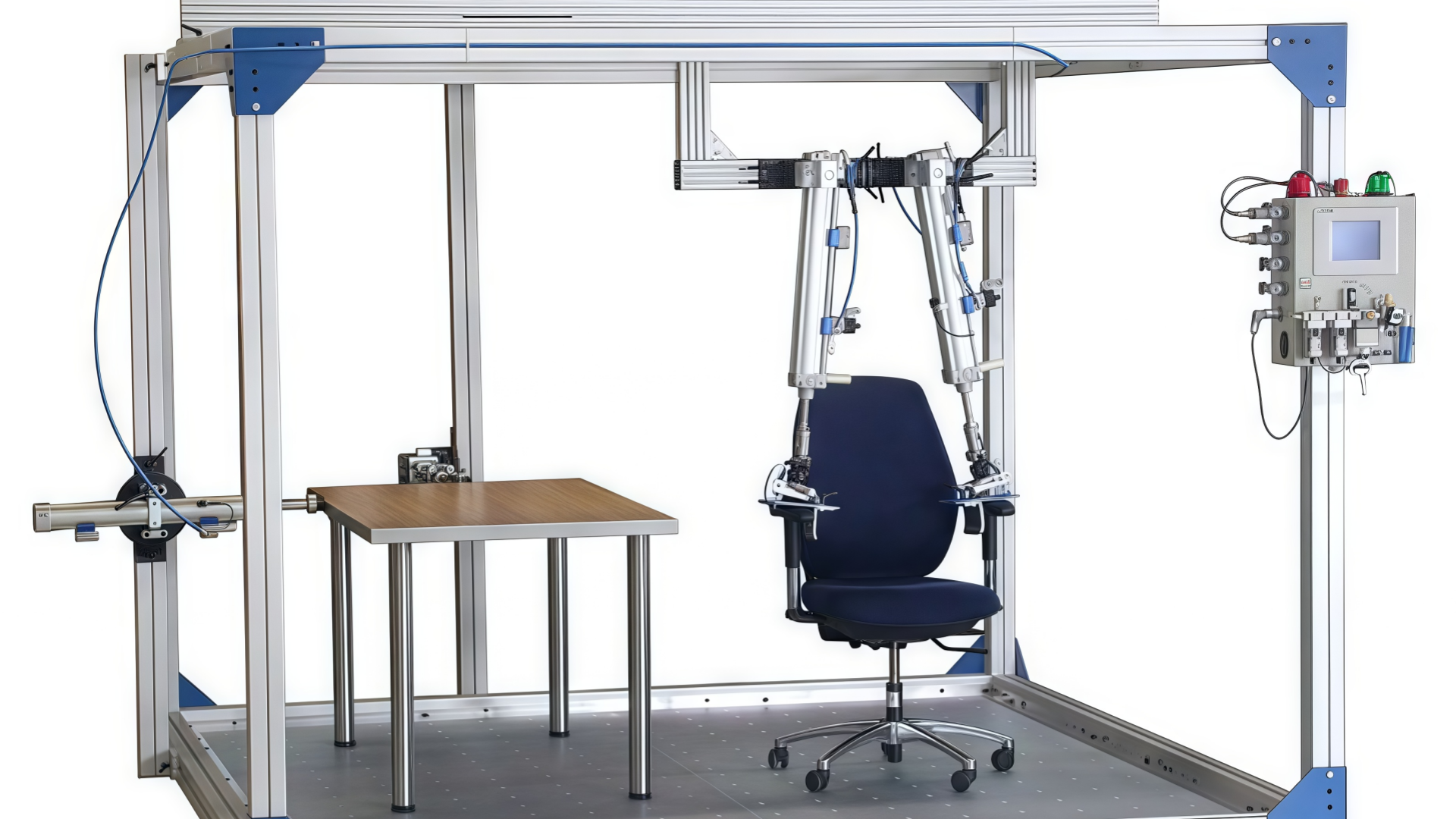
For procurement purposes, request:
Model-specific ANSI/BIFMA X5.1 test evidence or a current BIFMA Compliant listing.
Confirmation that the documentation applies to the quoted chair configuration.
Warranty terms for the same model.
Information on serviceable components.
The intended usage environment and duty cycle.
ANSI/BIFMA X5.1 testing provides evidence that a chair model passed defined performance tests. It does not guarantee a specific field lifespan, warranty outcome, ergonomic fit or failure rate in every office.
An adjustable task chair can support a better workstation setup, but it cannot independently prevent injury or guarantee productivity gains.
Ergonomic outcomes depend on the relationship between:
The chair.
Desk height.
Monitor height and distance.
Keyboard and mouse position.
Lighting and glare.
Work tasks.
User habits.
Breaks and posture changes.
Training on chair adjustment.
NIOSH describes ergonomics as fitting work tasks and environments to worker capabilities in order to help reduce work-related musculoskeletal disorders and improve safety. This supports a broader workstation and work-practice programme rather than a single-product claim.
| Adjustment | Why It Matters |
Seat height | Supports appropriate foot placement and desk alignment |
Seat depth | Helps support different leg lengths without pressure behind the knees |
Lumbar support | Helps users adjust lower-back support to preference and body shape |
Arm adjustment | Helps align arms with desk and keyboard height |
Tilt and tension | Supports movement and different seated postures |
Backrest height | Affects support for different torso lengths |
Headrest | May be useful for selected users, but is not necessary for every task chair |
The right chair is one that can be adjusted to the intended user population and work setup. If a chair is shared, clear adjustment instructions and easy-to-use controls become especially important.
Before issuing an RFP or approving a task-chair order, include the following requirements:
Exact chair model and configuration identified.
Applicable model-specific ANSI/BIFMA X5.1 evidence requested.
Warranty split by frame, base, cylinder, mechanism, foam, upholstery and labour.
Intended usage conditions stated: single shift, multi-shift or 24/7.
Published parts catalogue requested.
Pricing for gas cylinders, casters, arm pads and mechanisms provided.
Expected part lead times documented.
Seat height, depth, lumbar, arm and tilt adjustments specified.
Floor type confirmed so suitable casters can be selected.
Replacement and repair process documented.
Serial-number or asset-tracking process agreed.
Packaging, freight and installation scope clarified.
End-of-life removal, recycling or reuse plan considered.
A sample chair or pilot area approved by representative users.
For a full office-furniture procurement framework, read Office Furniture Procurement: B2B Buying Guide with Total Cost Analysis.
Hongye Furniture Group supports commercial office projects with task chairs, executive chairs, visitor seating, meeting chairs, lounge furniture and workstation systems.
For qualified office seating projects, Hongye can support:
Product and configuration selection.
Task-chair adjustment and component specifications.
Material and upholstery samples.
Product drawings and dimensions.
Warranty and spare-parts information.
Applicable product documentation where available.
Export packing and logistics preparation.
Project-based quantity planning and delivery coordination.
Where performance, emissions or sustainability evidence is required, buyers should request product-specific documentation and verify its scope, validity and model coverage before approval.
For broader office-furniture budgeting, read Office Furniture Cost Guide 2026: Budgets, Prices and Hidden Costs.


The Place Business Center | Office Project By Hongye Furniture
Service life varies by construction, user weight, shift pattern, floor type, cleaning, maintenance and warranty support. Entry-level chairs may require earlier replacement when parts are unavailable. Commercial task chairs with serviceable components, clear warranties and suitable maintenance can remain in use longer. Ask suppliers for warranty terms, parts availability and model-specific performance evidence.
Office chair total cost of ownership includes acquisition, freight, installation, repairs, replacement, disposal, internal labour, warranty recovery and residual value. The correct model depends on chair price, expected service life, usage pattern, repair support and local labour costs.
It can be worthwhile when the organisation expects to keep the chair for a long period, needs advanced adjustments, has intensive usage or values enhanced service support. For a shorter planning horizon, a commercial mid-range chair may provide better value. Compare model-specific warranty, parts, performance evidence and total cost over the expected holding period.
Common wear items include gas cylinders, casters, arm pads, upholstery and tilt mechanisms. The ability to replace these components can have a major effect on chair lifecycle cost.
ANSI/BIFMA X5.1 testing provides evidence that a specific chair model passed defined structural and durability tests. It does not guarantee a fixed lifespan in every workplace. When comparing chairs, use BIFMA evidence alongside warranty scope, repairability, spare-parts availability and intended usage conditions.
A chair with suitable adjustment range can help users set up their workstation more comfortably. However, comfort and ergonomic fit also depend on desk height, monitor position, keyboard setup, work habits and individual needs. Provide adjustment guidance and review the full workstation rather than relying on the chair alone.
Repair is often suitable for replaceable wear items such as casters, cylinders and arm pads when the frame and mechanism remain sound. Replace or seek professional assessment if the chair has structural damage, an unstable base, a failed mechanism or unavailable replacement parts.
Include the exact model, applicable ANSI/BIFMA X5.1 evidence, component-level warranty terms, intended usage conditions, a parts catalogue, part pricing, adjustment requirements, repair process, serial-number tracking and delivery/installation scope.
The best task-chair decision is not necessarily the lowest price or the most expensive specification. It is the chair that offers the right combination of adjustability, durability, warranty, repairability and lifecycle cost for the way your office actually operates.
For short-term, low-use spaces, entry-level seating may be sufficient. For daily commercial workstations, a serviceable mid-range chair often provides a strong balance of cost and performance. For long-hold workplaces or advanced ergonomic needs, spec-grade seating may justify its higher initial price.
Before purchasing, compare the full cost of ownership, ask for model-specific documentation and ensure that repair parts, warranty support and user adjustment are part of the plan.
No.1 Section, Heshan Industrial City, Heshan, Jiangmen, Guangdong, China
+86-133-9221-7708
Mon - Sat: 8 AM - 6PM
Sun: 11 AM - 3 PM