
 English
Views: 0 Author: Rebecca | Senior FF&E Procurement Specialist Publish Time: 2026-08-19 Origin: Site


Choosing between laminate, wood veneer and solid wood desks affects far more than appearance. The material you choose influences cleaning requirements, edge durability, repair options, maintenance workload, replacement timing and the total lifecycle cost of an office fit-out.

For most high-use commercial workstations, high-pressure laminate, commonly called HPL, is often the most practical starting point. It can provide strong resistance to daily wear, stains and routine cleaning when paired with a durable core, sealed cut-outs and impact-resistant edging.
Wood veneer offers a premium, natural appearance at a lower cost than solid wood. It can work well in executive offices, meeting rooms and customer-facing areas where traffic is moderate and the office can maintain the finish properly.
Solid wood is highly repairable and visually distinctive, but it is usually best reserved for signature pieces such as executive desks, boardroom tables and reception furniture. It requires appropriate humidity-aware construction, finishing and maintenance.
This guide compares laminate vs veneer vs solid wood desks for commercial offices. It explains what each material does well, where each one fails and how to specify the right desk material for a 10-year commercial lifecycle.
Methodology note: This is a commercial-use durability and procurement guide based on material properties, common construction methods, applicable test frameworks and lifecycle considerations. It is not a controlled 10-year laboratory study. Actual service life depends on desk construction, core material, edge treatment, cleaning practices, office use intensity, humidity and maintenance.
Commercial-grade HPL is often the most durable and lowest-maintenance choice for open-plan, shared and high-use office desks.
Wood veneer provides a premium visual finish, but it requires careful edge protection and maintenance in high-contact areas.
Solid wood provides the greatest refinish and repair potential, but it has the highest initial cost and needs appropriate finishing and humidity-aware construction.
Desk durability depends on the full specification: surface, core, edge treatment, cable cut-outs, joints and frame all matter.
NRC and furniture certifications do not determine desk durability. For commercial desks, request relevant desk and table performance evidence, surface data, edge details and warranty terms.
ANSI/BIFMA X5.5 is the relevant commercial performance reference for desk and table products; BIFMA X5.9 applies to office storage, not desks.
For high-volume workstations, HPL is often the most practical default. Veneer and solid wood are best used selectively where visual impact justifies additional care and cost.
| Desk Use | Recommended Starting Material | Why |
Open-plan workstations | HPL laminate with durable edge banding | High wear resistance, cleanability and lower maintenance |
Shared desks and hot-desking | HPL laminate or compact laminate | Frequent movement, spills and cleaning require resilient surfaces |
Manager offices | Wood veneer with protected edges | Premium appearance with moderate use |
Executive offices | Veneer or solid wood | Visual impact and controlled traffic can justify higher-cost materials |
Meeting rooms | Veneer or woodgrain HPL | Select based on appearance, catering use and maintenance capacity |
Boardrooms | Veneer or solid wood | Signature space where natural material can support brand identity |
Reception desks | Veneer, solid wood or premium HPL | Depends on visual importance, luggage impact and maintenance plan |
Pantry and break areas | HPL laminate | Better starting point for water, coffee and cleaning exposure |
The best material is not always the most expensive material. It is the material that fits the desk's location, use intensity, cleaning programme, maintenance capacity and lifecycle budget.

Desk surfaces rarely fail because of one deep scratch. They usually fail because of repeated small stresses: chair impacts, laptops dragged across surfaces, coffee spills, cleaning chemicals, cable cut-outs, poor edge banding, loose fittings and moisture entering the core.
| Performance Area | Why It Matters | What to Request |
Surface wear | Determines resistance to scratches, abrasion and daily contact | Material data sheet and relevant abrasion or scratch-resistance evidence |
Edge impact protection | Edges are often the first area to chip or delaminate | Edge material, thickness, corner detail and bonding specification |
Core and moisture resistance | Affects swelling, screw holding and long-term stability | Core-board type, density, moisture resistance and sealing details |
Frame stability | Determines wobble, racking and desk movement over time | Frame design, connector details and applicable desk performance evidence |
Repairability | Determines whether damage requires repair, refinishing or full replacement | Repair guide, spare material availability and warranty scope |
Important: A durable HPL surface cannot compensate for weak edge banding, poorly sealed cable cut-outs, low-quality core material or an unstable frame. The complete desk construction determines the real lifecycle outcome.

A commercial desk should be evaluated as a complete assembly:
| Construction Element | Why It Matters | What to Specify |
Surface | Controls scratch resistance, stain resistance and visual appearance | HPL, veneer or solid-wood finish system |
Core | Controls screw holding, moisture behaviour and structural stability | Commercial-grade particleboard, MDF, plywood or solid wood |
Edge | Often the first point of failure in shared offices | ABS/PVC edging, solid-wood lipping or protected veneer edge |
Cable cut-outs | Can become moisture-entry points | Factory-sealed cut-outs and protected grommets |
Frame | Controls racking, wobble and load-bearing performance | Steel gauge, leg design, connectors and fasteners |
Finish | Controls cleanability, UV response and repair method | Coating type, sheen, cleaning guidance and repair process |
Hardware | Affects daily function and maintenance needs | Fixings, brackets, power modules and cable-management parts |
For commercial desks and tables, ANSI/BIFMA X5.5 is a relevant reference for structural safety, durability and performance. It applies to desk and table products, including traditional desks and tables.
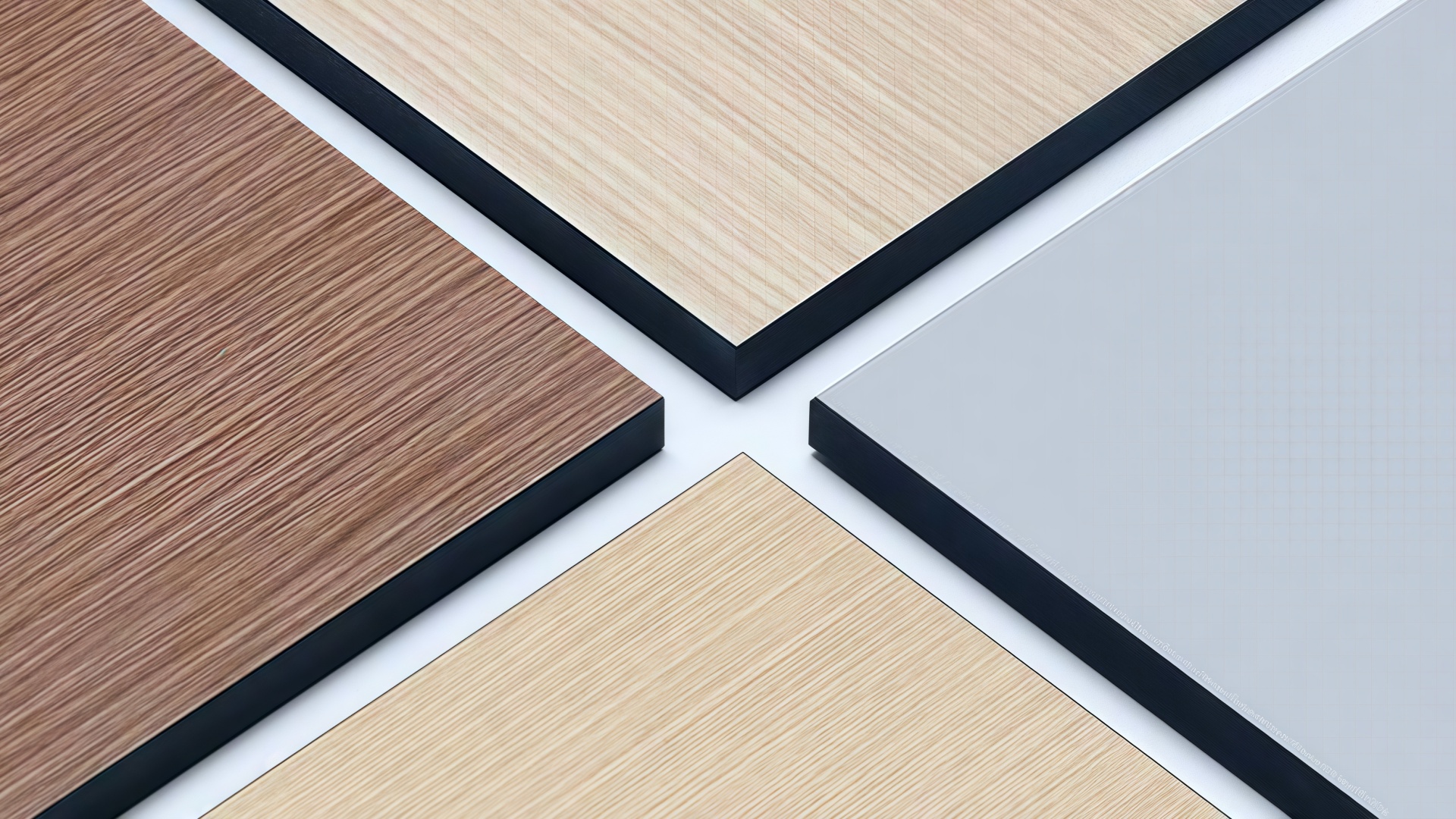
HPL, or high-pressure decorative laminate, is a surface material made by bonding resin-impregnated decorative papers under heat and pressure. It is widely used in commercial furniture because it can be durable, easy to clean and available in many colours, textures and woodgrain finishes.
ANSI/NEMA LD 3 provides test methods and performance values for high-pressure decorative laminates, including properties such as scratch resistance, impact resistance, staining, heat resistance and wear. These tests apply to the laminate material itself, not automatically to the complete desk construction.
Strong resistance to everyday stains and routine cleaning.
Durable surface for high-use desks and shared workstations.
Large selection of colours, textures and woodgrain finishes.
Lower initial cost than comparable veneer or solid-wood solutions.
Consistent appearance across large workstation quantities.
Easy replacement of a damaged top where standard sizes are used.
Deep surface damage is difficult to refinish invisibly.
Edges can chip if the edge banding is thin, poorly bonded or heavily impacted.
Moisture can damage the core when it enters through exposed edges, cut-outs or seams.
Low-cost laminates may not perform like commercial-grade HPL.
Repairs may require re-banding or full top replacement rather than refinishing.
| Item | Recommended Procurement Question |
Surface grade | Is the laminate commercial-grade HPL, and what performance documentation is available? |
Core material | Is the top built on commercial-grade particleboard, MDF or plywood? |
Edge banding | What material, thickness and bonding method are used? |
Corners | Are corners square, radiused or protected against impact? |
Cable cut-outs | Are cable holes and power-module cut-outs sealed at the factory? |
Cleaning | Which cleaners are approved, and which chemicals should be avoided? |
Replacement | Can matching tops or edge materials be supplied later? |
For high-use workstations, ask for impact-resistant edge banding appropriate to the project. In many commercial specifications, 2 mm ABS or PVC edging is used for exposed desk edges, but the correct detail depends on desk construction, design and project requirements.
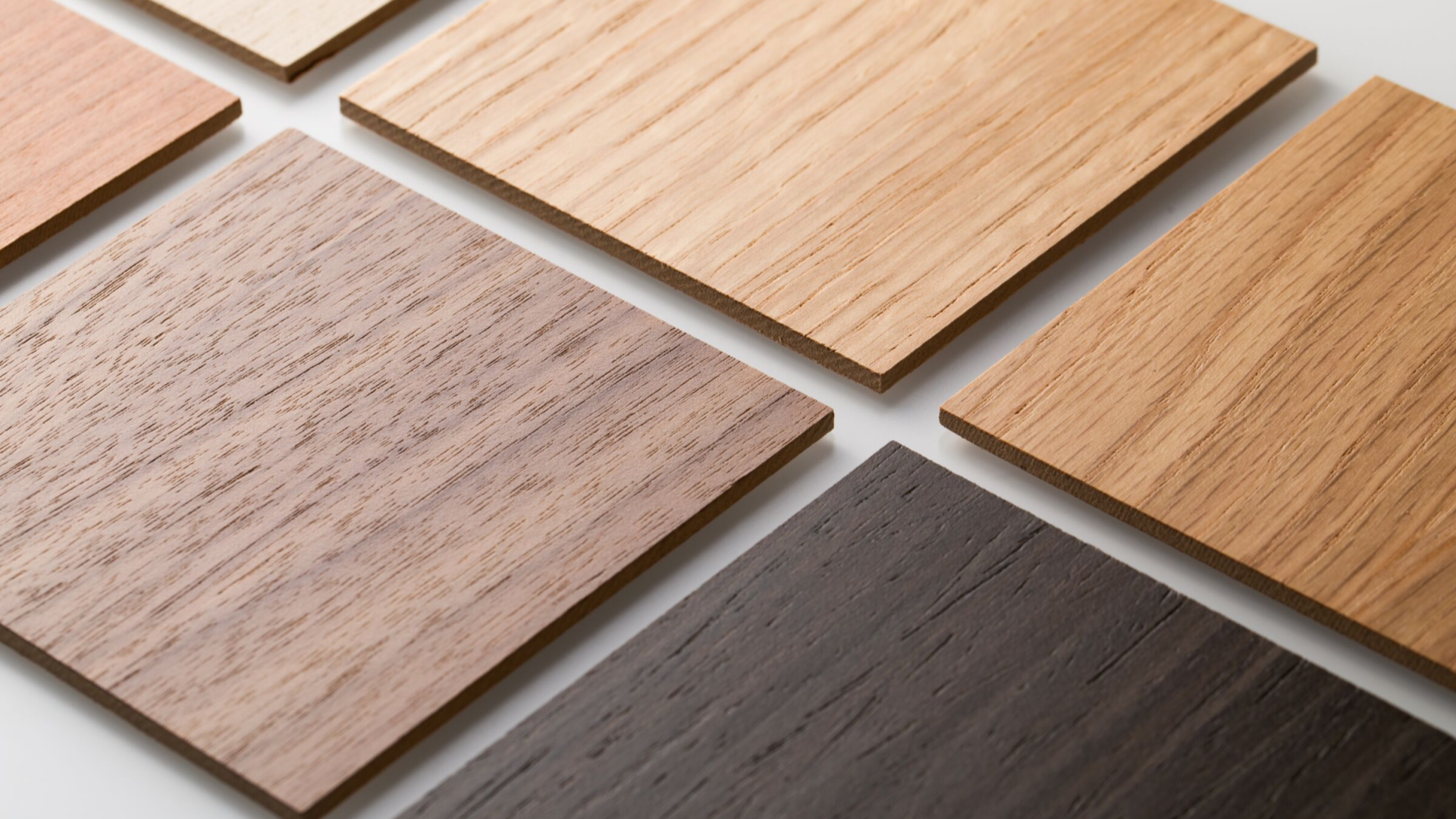
Wood veneer is a thin layer of real wood applied to a core substrate. It provides natural grain, warmth and visual variation while using less solid timber than a solid-wood top.
Veneer can be a strong choice for executive offices, meeting rooms, boardrooms and customer-facing spaces. However, it needs careful edge protection and finish selection, especially where bags, chairs, laptops and cleaning tools repeatedly strike the desk perimeter.
Natural wood grain and a more premium appearance than standard laminate.
Usually lower cost and lower weight than solid wood.
Can be colour-matched across desks, tables and cabinetry.
Minor finish damage may be repairable by a skilled furniture technician.
Appropriate for management, meeting and client-facing settings.
Deep scratches, chipped corners and veneer-through damage can be difficult to hide.
Thin veneers have limited refinishing potential.
Moisture exposure can damage the core if the finish, seam or edge fails.
Matching repairs may be challenging because grain, stain and ageing vary.
High-use shared desks may show edge wear faster than HPL surfaces.
| Item | Recommended Procurement Question |
Veneer type | What wood species, cut and thickness are specified? |
Core material | What substrate supports the veneer, and how does it perform under moisture exposure? |
Finish system | Is the finish lacquer, polyurethane, oil or another coating system? |
Edge detail | Are edges protected by solid-wood lipping, metal trim or a reinforced finish? |
Repair method | Can scratches, chips and stains be repaired on site? |
Matching material | Will extra veneer, stain or touch-up material be available for future repairs? |
Cleaning | Which cleaners are compatible with the specified finish? |
A well-finished veneer desk can perform well in controlled office environments. However, veneer should be specified with realistic maintenance expectations, particularly for tables used with coffee, catering or frequent laptop movement.
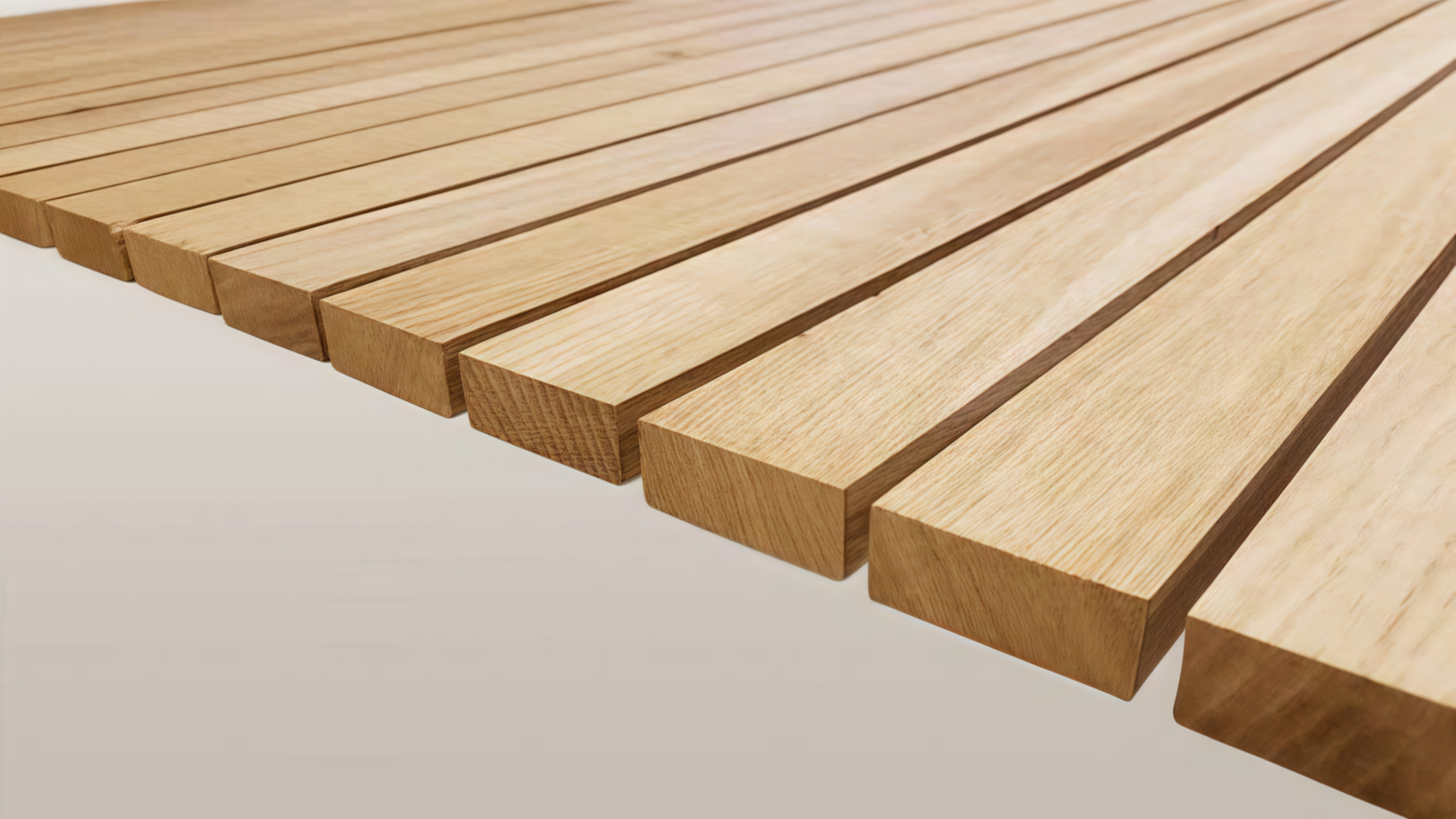
Solid wood desks use wood as the primary structural and visual material rather than a thin decorative layer over a composite core. They offer strong tactile quality, natural variation and high repair potential.
Solid wood is not automatically more durable in every commercial application. Wood responds to changes in temperature and humidity, and it requires correct joinery, finishing and environmental control to perform well over time.
Natural material character and visual distinction.
High potential for sanding, refinishing and long-term restoration.
Dents and scratches can often be repaired by woodworking specialists.
Appropriate for signature furniture, executive offices and boardrooms.
Can support strong brand storytelling where natural materials matter.
Highest initial cost among the three options.
More sensitive to humidity changes than HPL or veneer systems.
Requires correct construction details to allow natural wood movement.
May dent or show marks more easily than a hard HPL surface.
Oil-finished wood requires a documented maintenance programme.
Weight, shipping and installation complexity can be higher.
| Item | Recommended Procurement Question |
Wood species | Which species is used, and what is its expected hardness and grain behaviour? |
Moisture content | What moisture content is targeted before manufacturing and installation? |
Construction method | How does the design allow for seasonal wood movement? |
Finish system | Is the finish oil, lacquer, polyurethane or another protective coating? |
Edge profile | Are edges shaped to reduce visible impact damage? |
Maintenance | What re-oiling, refinishing or repair process is required? |
Repairability | Can the desk be sanded and refinished without changing dimensions or appearance? |
Solid wood may be a strong choice when the desk itself is an important design feature and the office has the maintenance capacity to protect it. It is often less practical for high-volume shared workstations.
Metric | HPL Laminate | Wood Veneer | Solid Wood |
Everyday abrasion resistance | Often high with commercial-grade HPL | Finish-dependent | Finish-dependent |
Stain and spill resistance | Often high when edges are sealed | Moderate; depends on finish and seam condition | Varies significantly by finish and maintenance |
Edge durability | Strong with durable edge banding | Requires careful protection | Dents rather than chips; profile and finish matter |
Moisture tolerance | Good surface resistance; weak points are edges and cut-outs | Moderate; core can be affected if moisture enters | Depends on finish, construction and humidity control |
Repairability | Edge repair or top replacement often practical | Minor repair possible; deep damage can be difficult to hide | Highest potential for sanding and refinishing |
Dimensional stability | Usually high with stable core and construction | Generally stable with quality core and finish | Requires humidity-aware construction |
Initial cost | Usually lowest | Mid-range | Usually highest |
Maintenance effort | Low | Low to moderate | Moderate to high, depending on finish |
Best commercial use | Open-plan, shared desks and break areas | Executive offices and meeting spaces | Boardrooms, reception and signature pieces |
Abrasion data can help compare surface systems, but only when the testing conditions are equivalent.
ASTM D4060 is a test method for evaluating abrasion resistance of organic coatings using a Taber Abraser. It is commonly used for coatings on rigid, flat test samples. The test setup—including abrasive wheel type, load, number of cycles and failure criteria—must be known before comparing one result with another.
Therefore, avoid comparing “Taber cycles” from different supplier brochures unless they use the same:
Test standard.
Abrasive wheel.
Applied load.
Sample preparation.
Coating or surface thickness.
Failure criteria.
Test laboratory.
Instead of asking only, “How many Taber cycles does this desk survive?”, ask:
Which test method was used?
Is the tested sample HPL, veneer, a coating panel or the complete desktop?
What was the abrasive wheel and load?
What was defined as failure?
Can the supplier provide the report for the specified surface and finish?


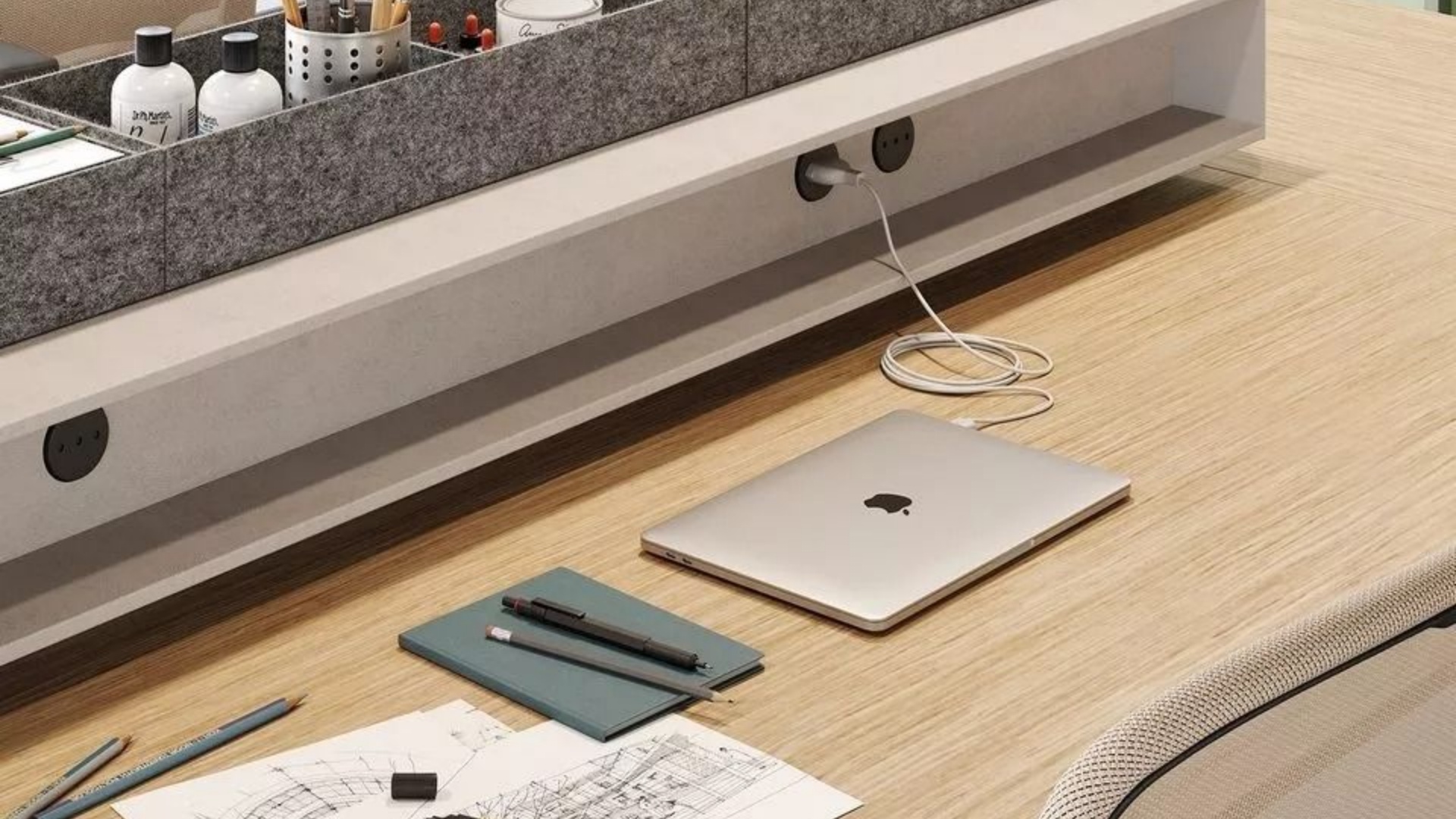
CEO Desk Voyage Series with Modern Wood Panel
In shared offices, desk edges are exposed to backpacks, chair arms, vacuum cleaners, cleaning carts and repeated body contact. A desk with a strong surface but weak edge treatment can fail quickly.
| Edge Treatment | Typical Strength | Main Risk | Best Use |
HPL with ABS or PVC edge banding | Good impact and moisture protection when properly bonded | Damage at seams, corners or cut-outs | Open-plan and shared desks |
HPL with veneer edge | Premium appearance | Veneer edge may wear or chip sooner | Management and meeting spaces |
Veneer with reinforced edge finish | Natural appearance | Finish failure may allow moisture into core | Moderate-use executive furniture |
Solid-wood lipping | Good repairability and premium detail | May dent; requires suitable finishing | Veneer desks and premium tables |
Solid wood with oil finish | Natural tactile finish | Requires periodic maintenance and careful cleaning | Low-traffic signature pieces |
Rule of thumb: For desks used near coffee, water bottles or regular cleaning, specify sealed edges, protected cut-outs and a documented cleaning method. In many commercial environments, these details matter as much as the visible surface.
| Office Zone | Default Starting Point | Consider an Alternative When |
High-use open plan | HPL with durable edge banding | The design requires a premium wood appearance and traffic is controlled |
Shared desks and hot-desking | HPL or robust compact laminate | Heat, moisture or intense cleaning requires a more specialised surface |
Focus desks | HPL or veneer | Veneer can work when users are assigned and maintenance is controlled |
Management offices | Veneer with protected edges | Heavy use, frequent moves or coffee service may favour HPL |
Meeting rooms | Veneer or woodgrain HPL | Catering, training or intensive daily use may favour HPL |
Executive offices | Veneer or solid wood | Select solid wood only when design impact and maintenance justify it |
Boardrooms | Veneer or solid wood | Budget, expected use and maintenance programme support a premium finish |
Reception | Premium HPL, veneer or solid wood | Choose based on luggage impact, visitor traffic and repair strategy |
Pantry and break areas | HPL | Water, food stains and frequent cleaning are expected |
The pragmatic commercial approach is often to use HPL for high-volume desk areas, veneer for management and meeting spaces, and solid wood for a limited number of visually important pieces.


Luxury Walnut Veneer Meeting Room Table
The visible surface is not the only environmental consideration. HPL, veneer and solid wood desks may all include composite cores, adhesives, coatings, edge banding and hardware that influence indoor-air-quality performance.
When a project has sustainability or low-emission requirements, request:
Product-specific low-emission documentation where applicable.
Core-panel material information.
Adhesive and coating data.
Wood-traceability documentation where required.
FSC Chain of Custody information for eligible wood products.
Repair and end-of-life guidance.
Packaging material information.
Confirmation that documents apply to the actual desk configuration being ordered.
Solid wood does not automatically mean low emissions, and laminate does not automatically mean high emissions. The relevant evidence must apply to the completed product or approved material configuration.
The right 10-year cost comparison depends on your actual product price, repair labour rates, cleaning programme, damage history, expected office moves, maintenance capability and replacement lead times.
| Cost Component | HPL Laminate | Wood Veneer | Solid Wood |
Initial purchase | Usually lowest | Mid-range | Usually highest |
Routine cleaning | Low | Low to moderate | Finish-dependent |
Edge repair | Re-banding or top replacement may be practical | Repair possible, but colour matching can be difficult | Can often be repaired by a wood specialist |
Surface repair | Deep damage may require a new top | Spot repair possible; deep damage can remain visible | Highest refinishing potential |
Refinish potential | Limited | Limited by veneer thickness | Highest |
Maintenance effort | Usually low in high-use zones | Moderate | Moderate to high depending on finish |
Residual value perception | Functional | Premium | Highest for quality signature pieces |
Best economic use case | High-volume workstations | Executive and meeting areas | Low-volume statement furniture |
Use the following formula for a project-specific total cost of ownership calculation:
10-Year TCO=Initial Purchase+Freight+Installation+Cleaning and Maintenance+Repairs+Reconfiguration+Replacement+Disposal−Residual Value10-Year TCO=Initial Purchase+Freight+Installation+Cleaning and Maintenance+Repairs+Reconfiguration+Replacement+Disposal−Residual Value
A wood desk may have a higher initial cost but remain repairable for decades. An HPL desk may have a lower initial cost and low maintenance demand in high-use zones. The best value depends on where the desk is used and how the organisation maintains it.
Before approving a commercial desk material, confirm:
Surface type and exact finish code are approved.
Core substrate and thickness are defined.
Edge-banding material, thickness and corner treatment are specified.
Cable cut-outs, power modules and seams are sealed against moisture.
Desk frame, connectors and legs meet project stability requirements.
Applicable ANSI/BIFMA X5.5 or equivalent performance evidence is reviewed.
Material test reports use relevant, clearly stated methods.
Cleaning products and maintenance procedures are documented.
Repair approach is defined for scratches, chips and edge damage.
Spare tops, edge materials or touch-up kits are available where needed.
Warranty scope covers the surface, edge, frame and hardware.
Freight packaging protects edges and corners during delivery.
The desk material matches the use intensity of its office zone.
Hongye Furniture Group provides desk and table configurations in HPL laminate, wood veneer and solid wood for workstations, meeting tables, executive desks, reception areas and commercial office projects.
For qualified projects, Hongye can support:
Material samples and finish boards.
HPL, veneer and solid-wood specification options.
Core-panel, edge-band and frame construction details.
Product drawings and dimensions.
Custom workstations, executive desks and meeting tables.
Finish, upholstery and hardware coordination.
Product-specific documentation where applicable.
Export packing and logistics preparation.
The best material choice depends on the desk's location, use intensity, cleaning routine, visual requirement, maintenance capacity and total lifecycle budget.
For broader cost planning, read Office Furniture Cost Guide 2026: Budgets, Prices and Hidden Costs.


The Place Business Center | Office Project By Hongye Furniture
For high-use desks, commercial-grade HPL laminate is often the safer default because it is generally easy to clean, resistant to routine stains and available with durable edge solutions. Veneer may be preferable where a natural wood appearance is important and use is more controlled.
Minor finish damage may be repaired by a skilled technician. However, deep scratches, chipped corners and veneer-through damage can be difficult to hide. Repair success depends on veneer thickness, grain matching, stain colour and finish system.
Yes. Solid wood can be suitable for executive offices, boardrooms, reception desks and other signature pieces. It requires appropriate finishing, humidity-aware construction and a maintenance plan. It is usually less practical for high-volume shared workstations.
Request impact-resistant edge banding appropriate to the desk design, including clear requirements for thickness, corner treatment, bonding quality and sealed cut-outs. In many high-use commercial applications, 2 mm ABS or PVC edging is commonly specified, but the final specification should match the desk construction and project requirements.
Commercial-grade HPL with sealed edges, protected cut-outs and a moisture-resistant core is often the most practical starting point. Confirm the surface and edge system can tolerate the cleaning agents, water exposure and food spills expected in that area.
Laminate, veneer and solid wood all have a place in commercial office furniture. The correct choice depends on where the desk will be used, how often it will be cleaned, how likely it is to be moved or impacted and how much maintenance the organisation can support.
For high-use workstation zones, HPL usually provides the strongest balance of durability, cleanability and lifecycle value. Veneer brings natural visual quality to executive and meeting areas. Solid wood delivers the greatest repair potential and design presence when used selectively for signature furniture.
The best office desk specification is not simply the most premium surface. It is a complete construction system—surface, core, edge, frame and repair strategy—matched to the way the office actually works.
No.1 Section, Heshan Industrial City, Heshan, Jiangmen, Guangdong, China
+86-133-9221-7708
Mon - Sat: 8 AM - 6PM
Sun: 11 AM - 3 PM