
 English
Views: 0 Author: Site Editor Publish Time: 2026-02-03 Origin: Site


A law firm's office isn't just a place to put desks; it's a physical expression of credibility, discretion, and brand. Legal clients still judge a firm's professionalism the moment they walk into reception, and top associates care whether the workplace supports focused work, hybrid collaboration, and wellbeing. That's why legal office furniture has become a strategic lever in law office design, not just a décor choice.
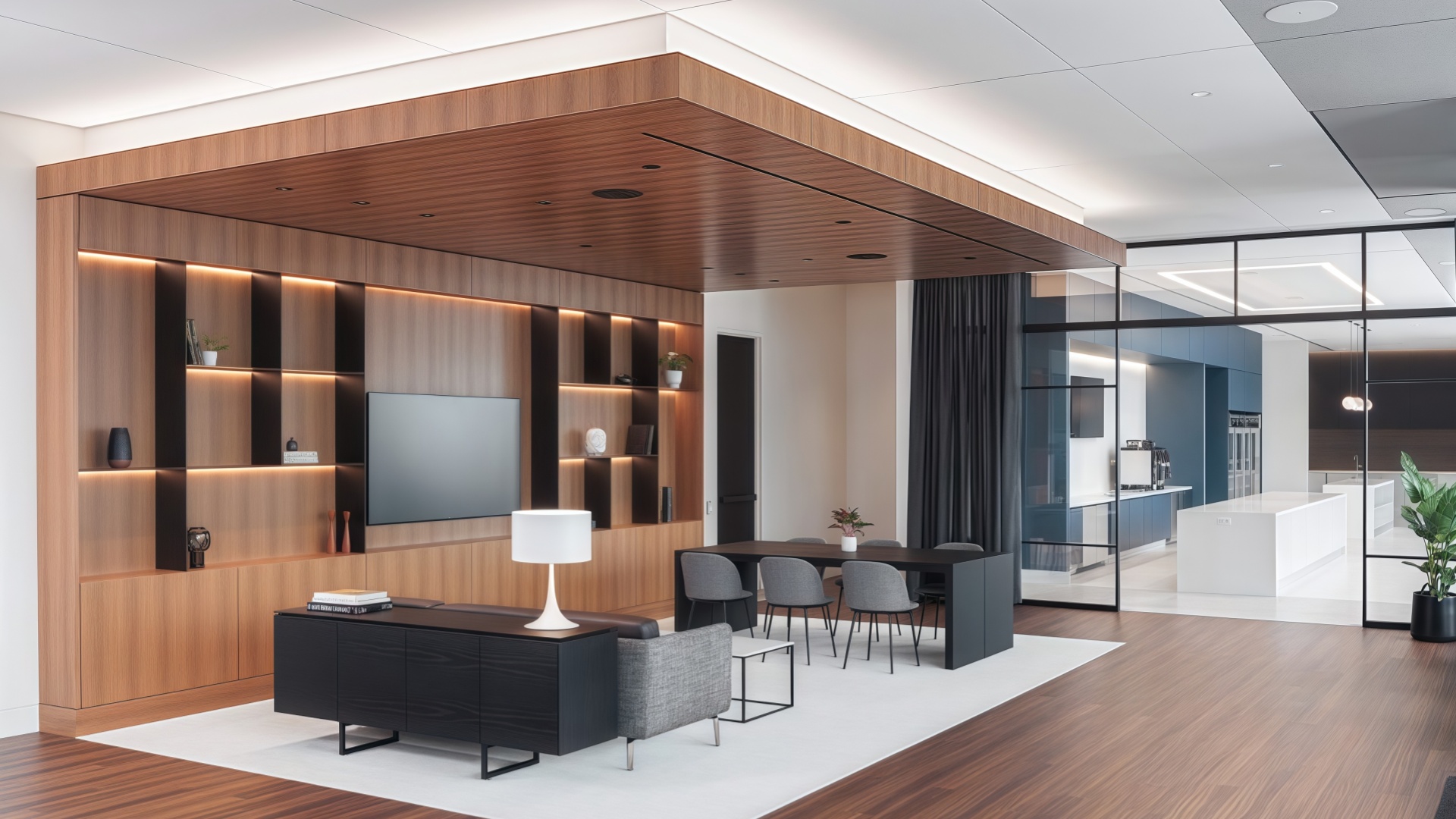
In 2025, law offices are shifting away from endless corridors of private offices and dark boardrooms toward brighter, more flexible layouts. A 2024 Savills report cited by Interaction found many firms are reducing private office footprints in favor of hybrid‑friendly workspaces, using hot‑desking and “neighborhood seating” to create more collaboration zones and social spaces.
Key macro‑trends shaping law office design in 2024–2026 include:
Hybrid work: Fewer fixed desks, more bookable workstations, focus rooms, and Zoom‑ready enclaves.
Client‑centric hospitality: Reception and meeting suites now look more like boutique hotel lounges than DMV waiting rooms.officesnapshots+1
Wellbeing and inclusivity: Ergonomic professional office furniture, biophilic elements, quiet rooms, and wellness spaces are becoming standard.
Technology and AI: Fewer paper files, more digital case rooms, and meeting furniture designed around integrated video, power, and acoustics.
Sustainability: Longer‑lasting furniture, FSC wood, and reconfigurable systems are increasingly specified for large legal fit‑outs.
These shifts don't change the core requirements of legal office furniture—privacy, storage, and formality—but they do change how you combine executive desks, workstations, storage, and meeting furniture into a coherent law‑office ecosystem.


Legal practice has unique demands that directly impact professional office furniture specifications.
Legal work requires confidential phone calls, sensitive client meetings, and heads‑down drafting.
Implications for furniture:
Use high‑back task chairs and upholstered soft seating in meeting rooms to absorb sound.
Choose workstation screens, acoustic panels, or storage walls to visually and acoustically separate open areas.
In reception and client lounges, favor soft surfaces and area rugs over hard, echo‑prone materials.
Even with digital case management, law firms still manage large volumes of sensitive documents and devices.
Furniture design responses include:
Built‑in lockable credenzas and file cabinets behind partner desks.
Integrated secure storage in paralegal and associate workstations, with lockable drawers for files and hardware.
Thoughtfully placed server or records rooms with specialized shelving and furniture rated for heavy loads.
Attorneys often spend 8–12 hours a day at their desks; poor ergonomics risk burnout and musculoskeletal issues.
Law‑firm‑appropriate ergonomic choices:
Height‑adjustable desks for associates and paralegals to support sit‑stand work, paired with more formal fixed desks in partner offices.
High‑quality ergonomic chairs with adjustable lumbar support, seat depth, and armrests.
Monitor arms, under‑desk CPU holders, and cable management to keep work surfaces clear and reduce neck strain.
Haworth's 2024 research into legal workplaces found growing emphasis on ergonomic workstations and wellbeing, alongside collaboration spaces and tech integration. This directly influences legal office furniture specs for progressive firms.
The reception area must immediately convey competence, discretion, and brand.
Recommended professional office furniture elements:
A reception desk with clean lines, high front panel for document privacy, and integrated storage.
Comfortable yet structured lounge seating—modern sofas, armchairs, and side tables suitable for clients in business attire.
Occasional tables sized for binders and laptops, with integrated power where possible.
Display furniture for awards, deals tombstones, or curated art books that reinforce expertise.
Interaction notes that many contemporary law firms are replacing sterile lobbies with hospitality‑inspired reception areas, often including coffee bars and informal seating to make client interactions more relaxed and brand‑aligned.
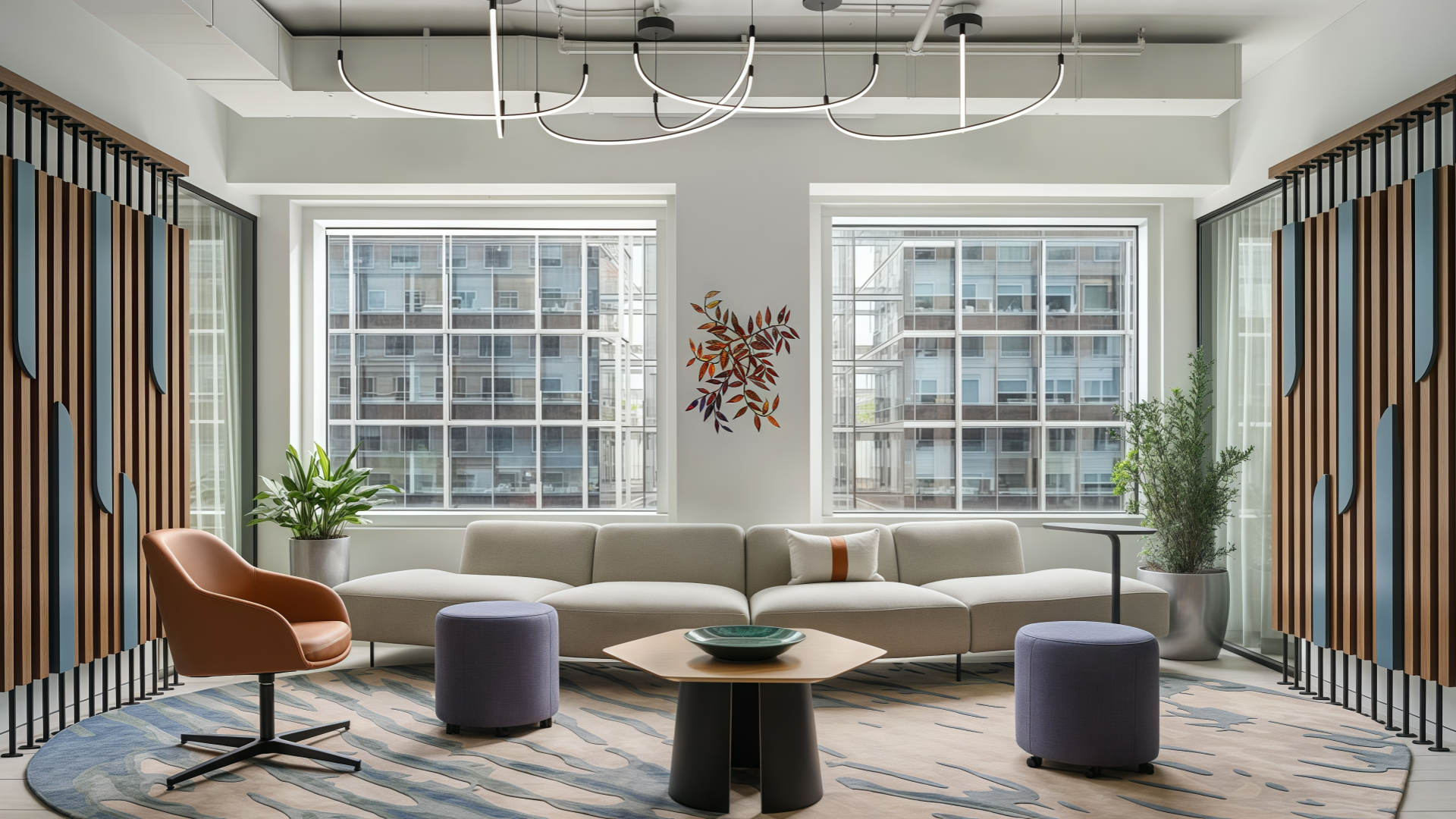
Partner offices remain a hallmark of law firms, but their layout and furniture are evolving.
Key furniture pieces:
Executive desk: Often a large wood or veneer top with a return, paired with a modesty panel and integrated storage.
Meeting table or round table: A small meeting table in the office allows private consultations without needing a separate room.
Credenza and bookcases: For reference volumes, awards, and secure file storage.
Guest chairs: Two to three comfortable client chairs across from the desk or at the meeting table.
Modern designs are trending toward slightly lighter aesthetics—still substantial, but with slimmer profiles, more natural light, and less visual bulk than traditional mahogany “tanks.”

Associates and support staff need efficient, ergonomic legal office furniture that supports both focused drafting and quick collaboration.
Important features:
Bench or “neighborhood” workstations with privacy panels and acoustic properties.
L‑shaped or 120‑degree stations for spreading out case files.
Task seating with strong adjustability for long‑hour comfort.
Shared storage towers or under‑desk pedestal files with locks.
BCLE Furniture's case study of a U.S. law firm that installed over 500 DM‑100 L‑shaped workstations found that ergonomic, design‑forward workstations significantly improved employee experience, increased office attendance, and reinforced brand identity.

Legal meeting rooms need to support everything from client pitches to confidential negotiations and trial prep.
Furniture essentials:
Large conference tables with integrated power/data for laptops and video conferencing.
Comfortable but upright seating to support long meetings.
Mobile credenzas or case carts for exhibits and binders.
Occasional side tables or credenzas for catering and materials.
Hybrid practice means many meeting rooms now double as video studios; furniture layout must ensure good camera sightlines and cable routing for microphones and screens.
While many firms are shrinking formal libraries, they still need support‑space furniture.
Libraries: Modular shelving, study tables, and occasionally lounge chairs for quiet reading.
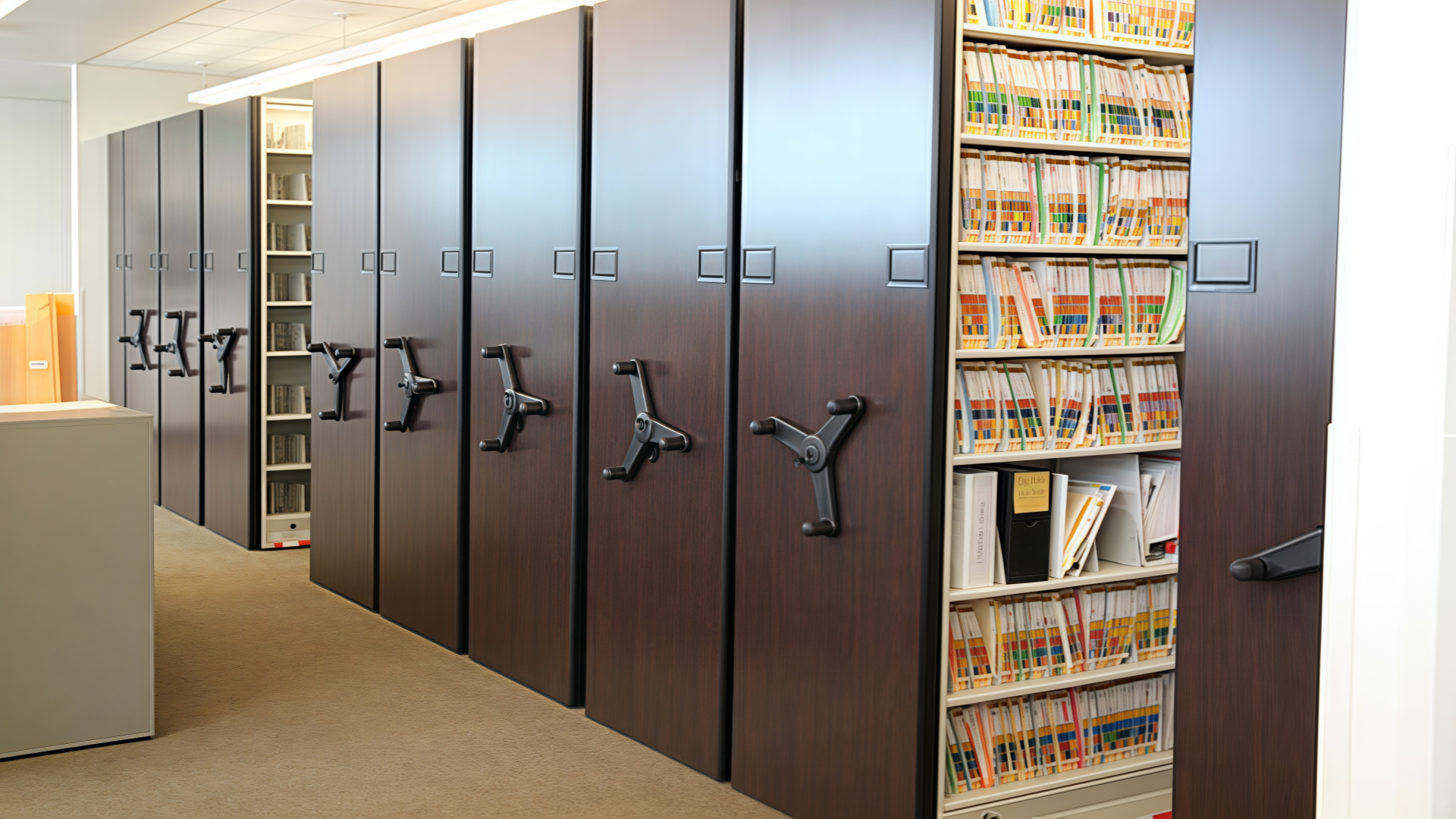
File rooms: High‑density filing systems or compact shelving designed for the weight and volume of legal files.
Break rooms: Café‑style seating, bar‑height counters, and soft seating to support informal connection and decompression.
Below are five law‑firm office examples frequently cited in design media and manufacturer case studies, each offering lessons for law office design and legal office furniture.
Interaction highlights VWV, a UK firm that reduced its office footprint from three floors to two by rethinking traditional layouts and investing in flexible work settings. The new office includes:
Flexible workstations, focus booths, and collaboration tables instead of rows of fixed desks.
Lounge‑style meeting spaces and open‑plan desking that still allow for confidential work via zoning and acoustics.[
The result: lower real‑estate costs, more collaboration, and a space that supports different working styles—powered by flexible, modular professional office furniture rather than “one desk per lawyer” thinking.
Gensler’s project for a prominent Los Angeles‑based Am Law firm created two coordinated workplaces in Downtown LA and Century City, each with distinct aesthetics but a shared design language.
Highlights:
Contemporary, collaborative workspaces serving attorneys, clients, and visitors, with unique amenities to attract top talent.
DTLA office: maximizes natural light with sleek furniture and minimalist finishes, complemented by fine art and sculpture.
Century City office: uses light woods, a cool palette, and sculptural staircases, with open seating areas and conference rooms that double as client‑facing showpieces.
Furniture in these spaces emphasizes clean lines, curated materials, and a mix of formal and informal settings, demonstrating how legal office furniture can balance tradition with modern brand expression.
A case study from Global Furniture Group describes Watson Goepel LLP, a Vancouver‑based firm that redesigned its office to align with its client‑centric philosophy.
Key lessons from the furniture strategy:
Use of systems workstations that support both heads‑down work and quick collaboration.
Integrated storage and meeting furniture that keep client files accessible yet private.
A consistent furniture palette across reception, offices, and meeting spaces reinforces a coherent professional image.
The project illustrates how professional office furniture from a single manufacturer can create both efficiency and brand consistency in a law‑firm setting.
Australian manufacturer Schiavello showcases a Global Law Firm project (name withheld) that emphasizes flexible, agile work settings tailored to a large legal practice.
According to the case study, the design integrates:
A mix of focus workstations, collaboration zones, and social spaces powered by reconfigurable furniture.
Furniture solutions that support hybrid work patterns while still honoring the need for private, confidential spaces.
This example shows how high‑end legal office furniture can be both modular and sophisticated, supporting long‑term adaptability as practice groups grow and change.
Office Snapshots curates law‑firm office designs worldwide, including recent examples like Faegre Drinker in London and Reynolds Frizzell in Houston.
Common design themes:
1. Sophisticated, hospitality‑inspired reception and client floors, with curated furnishings and views used as part of the “experience.”
2. Blended zones where lounge furniture, work tables, and meeting furniture coexist to support everything from quick huddles to formal negotiations.
These projects demonstrate how carefully chosen professional office furniture and finishes can differentiate a firm in competitive markets.
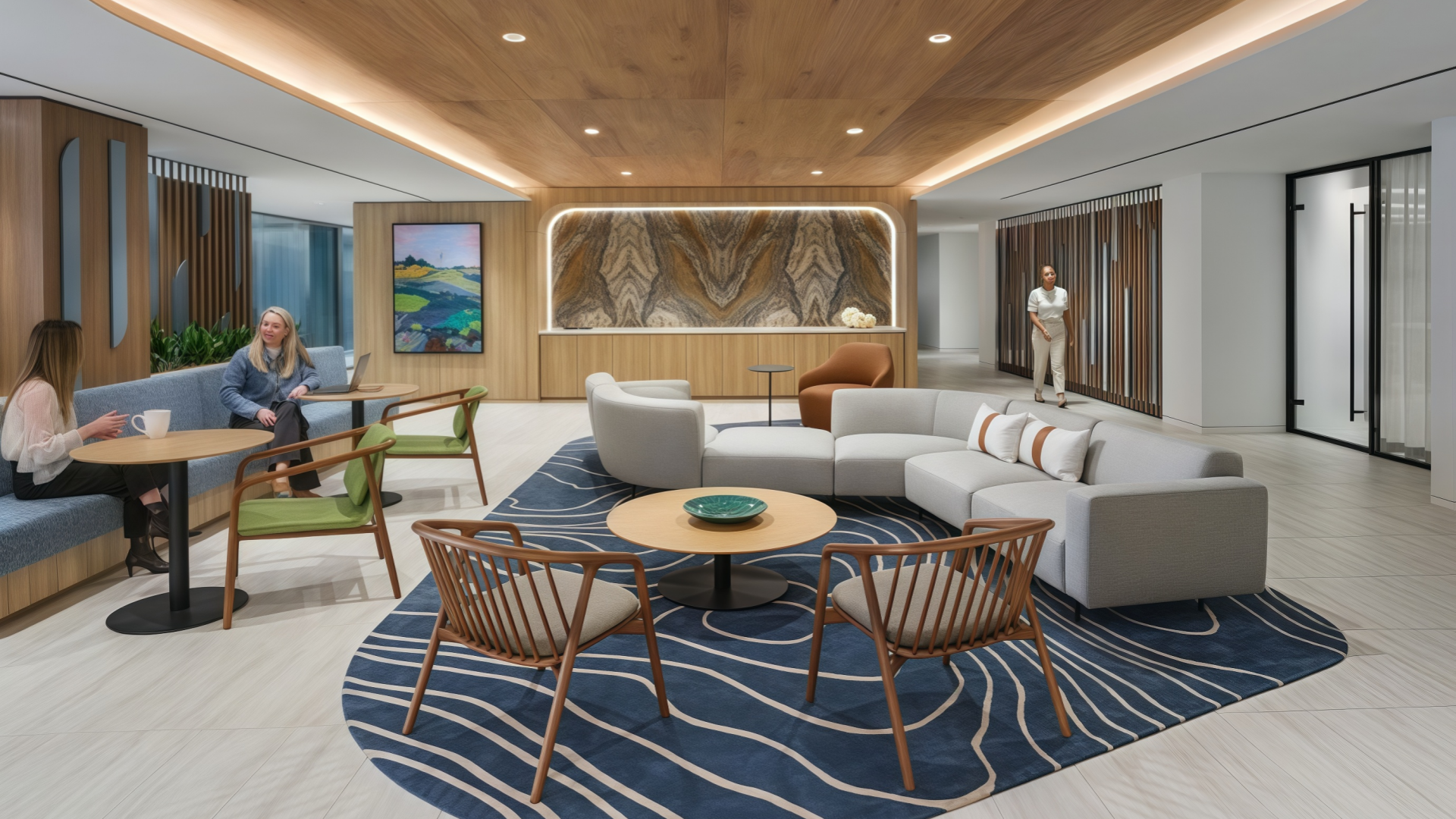
Smaller firms often occupy tighter footprints but still need to project authority.
Furniture recommendations:
Invest in a statement reception desk and a few high‑quality lounge pieces—clients remember the front door.
Use modular workstations that can expand as the firm grows.
Choose a consistent material palette (e.g., walnut veneer + black metal) across desks, storage, and meeting tables.
Mid‑size firms typically juggle partner expectations, younger associate needs, and budget realities.
Strategies:
Mix traditional partner offices with more contemporary associate work zones using systems furniture.
Standardize on a few workstation footprints and storage modules to simplify future reconfiguration.
Allocate more budget to client‑facing floors, conference furniture, and reception.
Large firms have the footprint and budgets to turn law office design into a competitive advantage.
Best practices:
Commission integrated furniture packages that work across multiple cities while allowing local customization.
Prioritize hybrid‑ready client suites: flexible conference furniture, divisible rooms, and tech‑integrated credenzas.
Use premium materials and art‑integrated furniture in signature spaces (boardrooms, lobbies), while standardizing systems furniture on attorney floors for efficiency.
To turn these insights into a concrete purchasing plan, use this checklist when evaluating legal office furniture vendors and lines.
Reception desk with integrated storage, power, and cable management.
Lounge chairs and sofas with commercial‑grade fabric or leather.
Side and coffee tables sized for files and laptops.
Coat storage and discreet storage for visitor materials.
Executive desk (fixed or sit‑stand) with modesty panel and cable routing.
Lockable credenza or lateral files.
Two to three guest chairs.
Optionally a small round table for in‑office meetings.


L Shaped Electric Standing Desk
Ergonomic task chairs with full adjustability.
Desks or benching systems with adequate depth for dual monitors and case files.
Screens or panels at appropriate heights for privacy.
Lockable under‑desk storage.
Conference tables with integrated power/data.
Conference chairs rated for long‑duration seating.
Sideboards or credenzas for catering and materials.
Furniture layout that supports video conferencing sightlines.
High‑density file storage rated for legal volumes.
Library shelving and reading tables.
Break‑room furniture (café tables, bar‑height counters, soft seating).
For law‑firm leaders and administrators, the takeaway is clear: legal office furniture isn't just operational—it's strategic. Choosing the right professional office furniture for reception, attorney offices, workstations, and client spaces directly affects recruitment, client experience, and the firm's ability to adapt to hybrid legal work.
No.1 Section, Heshan Industrial City, Heshan, Jiangmen, Guangdong, China
+86-133-9221-7708
Mon - Sat: 8 AM - 6PM
Sun: 11 AM - 3 PM