
 English
Views: 0 Author: Site Editor Publish Time: 2026-05-29 Origin: Site


The contract furniture market is undergoing a significant transformation in 2026. Global supply chain recalibration, evolving workplace design philosophies, and heightened sustainability demands are reshaping how buyers and specifiers approach furniture procurement for commercial projects.

For buyers and project managers sourcing from China manufacturers, understanding these 2026 trends is critical to making informed purchasing decisions — balancing quality, cost, lead times, and compliance requirements.
This guide covers the key contract furniture trends 2026 that every commercial furniture buyer and specifier should know before placing their next order.
Sustainability has moved from a marketing statement to a procurement requirement in 2026.
What buyers are demanding:
FSC-certified wood and responsibly sourced materials
Low-VOC finishes and adhesives
Recyclable or biodegradable upholstery materials
Environmental Product Declarations (EPDs) for major product lines
Compliance with regional regulations (CA Proposition 65, EU REACH, UK Fire Regulations)
Why it matters for China sourcing:
Many established China manufacturers, including those with 10+ years of export experience, have already invested in:
FSC chain-of-custody certification
Water-based finishing systems
Third-party quality audits (SGS, Bureau Veritas)
Detailed material traceability documentation
Buyers who prioritize sustainability-certified manufacturers gain a competitive edge in ESG-sensitive markets, especially in Northern Europe, Australia, and North America.
Buyer Action: Request EPD documentation and FSC certificates during the supplier qualification stage. Budget an additional 8-12% for certified materials if your project has strict sustainability requirements.

Post-pandemic workplace design has permanently shifted toward adaptive spaces. Contract furniture buyers in 2026 are prioritizing:
Modular lounge systems that reconfigure based on meeting formats
Height-adjustable workstations as the default, not the upgrade
Acoustic pods and booths for private calls in open-plan offices
Multi-purpose furniture for mixed-use hospitality spaces (work + leisure)
Market data:
Trend Driver | % of Buyers Prioritizing (2026) |
Flexibility / reconfigurability | 73% |
Ergonomic adjustability | 68% |
Acoustic performance | 61% |
Aesthetic cohesion with brand | 55% |
Sustainability certification | 52% |
Implication for procurement: When sourcing modular systems from manufacturers, request 3D CAD files and interlocking specifications before bulk orders. Mismatched connection standards between manufacturers can create installation failures on-site.
Biophilic design — integrating natural elements into built environments — has accelerated in 2026, particularly for:
Boutique hotels and wellness resorts
Premium corporate headquarters
Senior living and healthcare facilities
Key product demands:
Live-edge wood tables and reception desks
Stone-and-wood combination pieces
Green wall-compatible planters and benches
Natural linen, cotton, and bouclé upholstery fabrics
Rattan, bamboo, and woven natural fiber accents
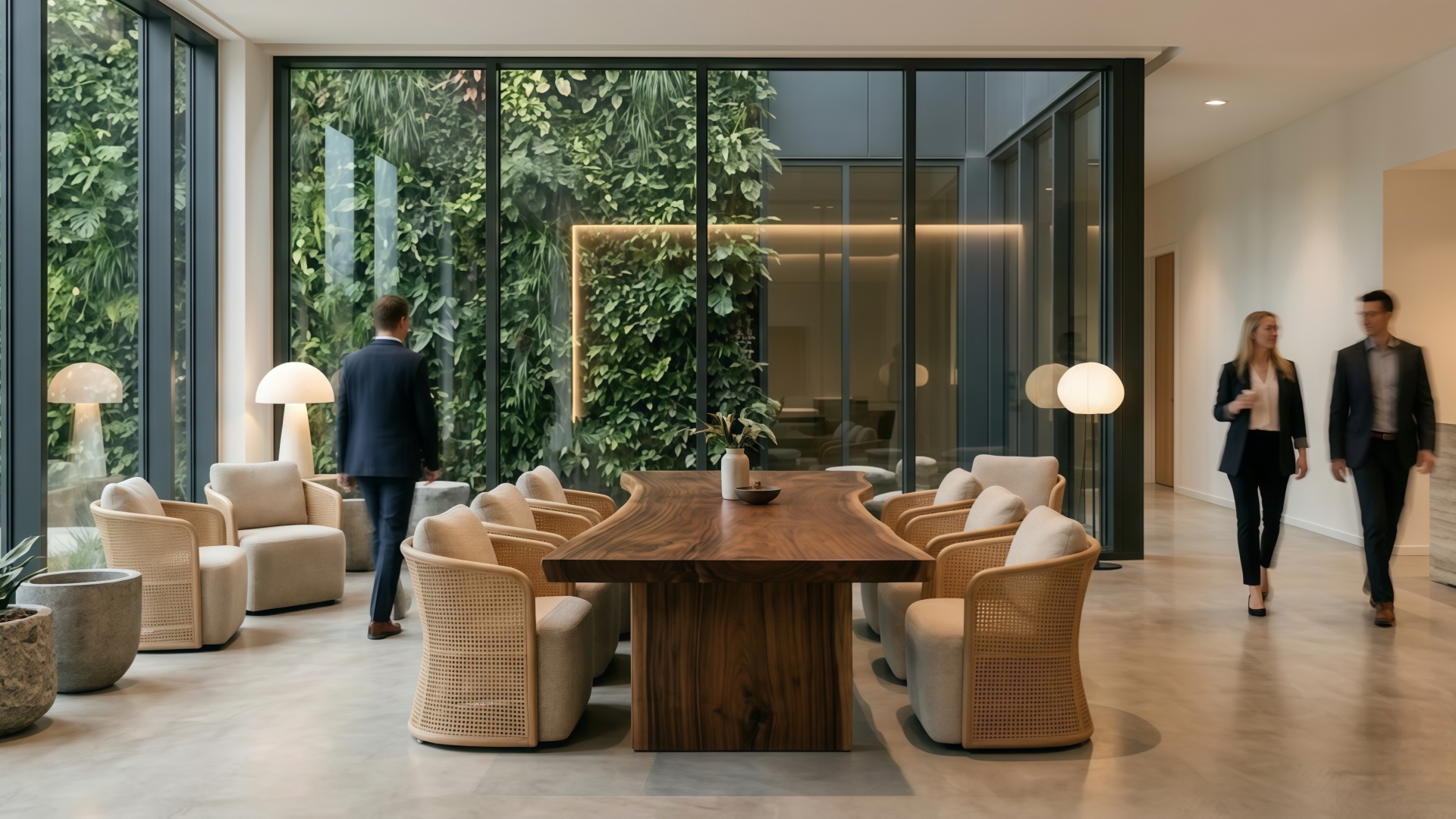
What specifiers are specifying more of:
Biophilic Element | Most Common Applications |
Natural wood surfaces | Guest rooms, lobbies, boardrooms |
Stone inlays | Reception desks, dining tables |
Living plant walls | Hotel atriums, corporate lounges |
Woven natural fibers | Outdoor furniture, spa areas |
Water features | Lobby installations, courtyard seating |
China manufacturing advantage: China-based manufacturers with export experience in European and Australian markets have refined biophilic finishing techniques — including matte oil-based coatings that protect natural wood grain while meeting international fire-retardancy standards.
Smart furniture is no longer experimental. In 2026, tech integration has become standard in high-specification contract projects:
Most requested smart features:
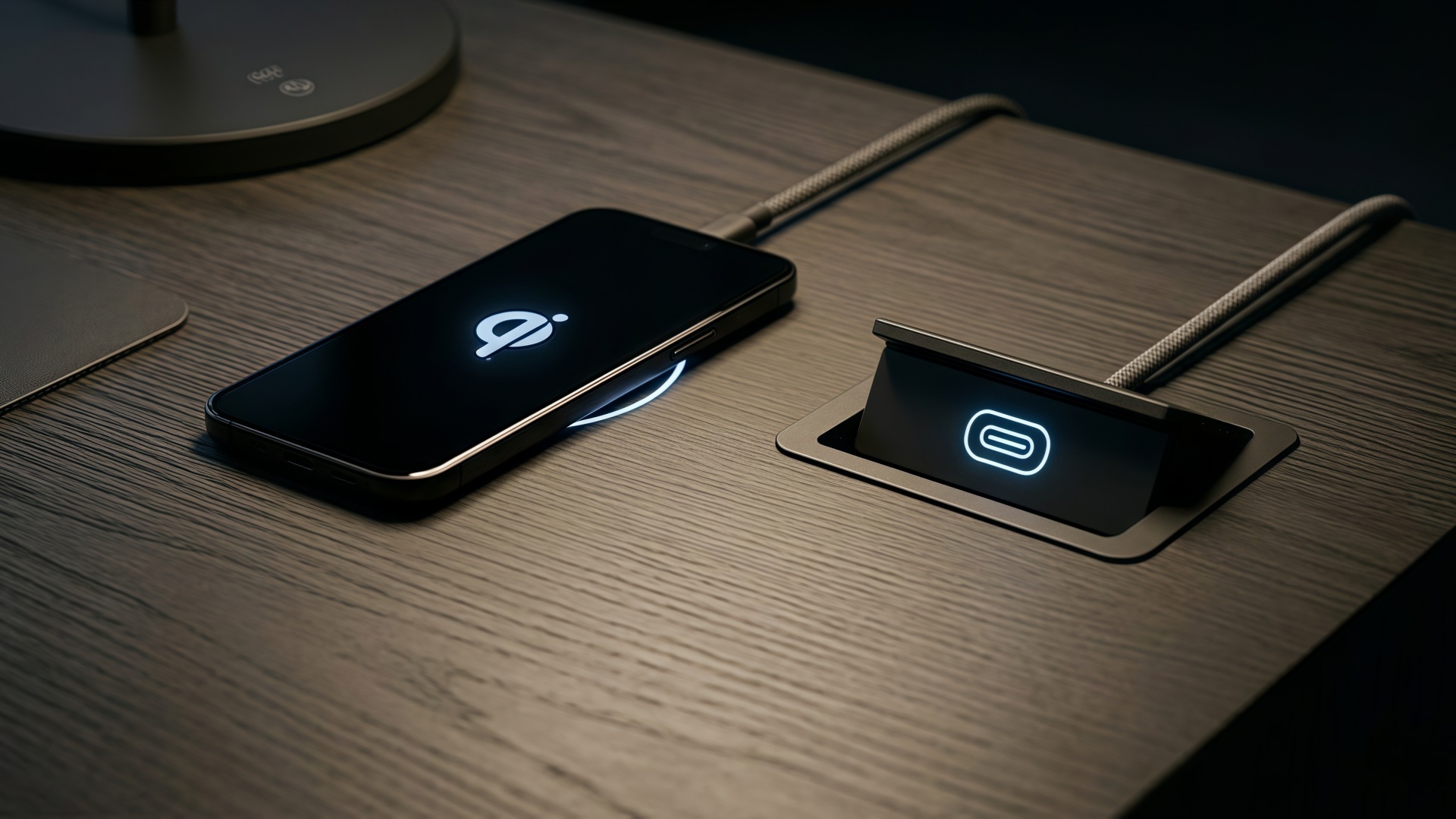
Built-in USB-A and USB-C charging (up to 65W PD fast charge)
Wireless charging surfaces (Qi2 standard)
Occupancy sensors in desks and conference tables
LED ambient lighting integrated into seating and partitions
Motorized height adjustment with memory presets
Smart desk specification checklist for buyers:
Feature | Minimum Standard | Premium Standard |
USB charging | USB-A 12W | USB-C PD 65W |
Height adjustment | Manual crank | Electric motorized |
Weight capacity | 80 kg | 150 kg |
Anti-collision | None | IR sensor |
Connectivity | Standalone | IoT integration |
Warranty | 2 years | 5 years |
Sourcing consideration: When sourcing tech-integrated furniture from China, specify the charging standard (USB-C PD, Qi2) explicitly in the product specification sheet. Regional variations exist, and incompatible standards create costly rework.
Global logistics have stabilized in 2026, but lead time remains a critical procurement variable.
Typical contract furniture lead times (from China):
Product Category | Standard Lead Time | Rush Order (+15-20%) |
Office desking systems | 35-45 days | 25-30 days |
Hotel casegoods (guest room) | 45-60 days | 35-42 days |
Lobby and common area furniture | 40-55 days | 30-38 days |
Upholstered seating | 40-50 days | 30-35 days |
Custom specifications | 60-90 days | 50-70 days |
Best practice for project managers:
Confirm lead times against the project's critical path before contract signing
Build in a 10-15% buffer for ocean freight delays
Use FOB or CIF incoterms with reputable freight forwarders
Request pre-shipment inspection (PSI) for orders over $10,000
With increased scrutiny on imported furniture, buyers in 2026 must verify compliance across multiple dimensions:
Mandatory certifications by market:
Market | Key Requirements |
USA | CA Proposition 65, TB117-2013 (fire retardancy), CALGreen compliance |
UK / EU | BS 5852 (fire retardancy), EN 1335 (office furniture ergonomics) |
Australia | AS/NZS 4688 (commercial furniture), AS 1530.3 (fire testing) |
Middle East | UAE Civil Defence fire standards, SASO certification |
Southeast Asia | VICTAMIX fire retardancy, country-specific import regulations |
What to request from manufacturers:
Material safety data sheets (MSDS)
Fire test certificates from accredited labs
Structural load testing reports
Finish adhesion and abrasion test results
Pre-shipment photo documentation
Hongye Furniture maintains full compliance documentation for all export markets, with dedicated QA teams conducting inline inspections at every production stage.


Tee Yih Jia Food Manufacturing | Office Project By Hongye Furniture
Understanding material and production cost movements helps buyers negotiate better contracts.
2026 cost impact factors:
Factor | Direction | Estimated Impact |
Raw timber (oak, walnut) | ↑ Increasing | +5-8% YoY |
Steel and aluminum | → Stable | ±2% |
Foam and upholstery | ↑ Moderate increase | +3-5% |
Ocean freight (China to US/EU) | → Stable | ±5% |
Labor costs (China coastal) | ↑ Gradual | +4-6% annually |
Sustainable materials premium | ↑ Increasing | +10-15% vs. standard |
Buyer negotiation strategy: 2026 is a buyer's market for standard specifications due to stable freight and moderate material cost increases. Use this window to lock in annual pricing frameworks with trusted manufacturers.
A: Standard MOQs range from 5-20 units per SKU for office furniture and 10-50 units per SKU for hotel casegoods. Some manufacturers accept lower MOQs for common items but charge a setup fee of $200-500 per SKU. Custom specifications typically require higher MOQs (20-100 units) to justify tooling costs.
A: Request pre-shipment inspection (PSI) from a third-party company such as SGS, Bureau Veritas, or QIMA. For orders over $20,000, insist on a full inspection covering materials, dimensions, finish quality, and packaging. Many buyers also request sample approvals (1:1 pre-production samples) before bulk manufacturing runs.
A: Industry-standard terms are 30% deposit at order confirmation, 40% before production, and 30% balance against shipping documents (B/L copy). Some manufacturers offer 15-15-70 terms for established clients. Avoid 100% prepayment for orders exceeding $5,000.
A: Document all damage with photos immediately upon container opening. File a claim with the freight forwarder within 24 hours of receipt. Reputable manufacturers typically cover damage caused by production defects but not ocean freight damage — ensure your forwarder provides cargo insurance. Request proper packaging specifications (foam corner protection, cardboard wrapping, wooden crating for high-value items) in the purchase order.
A: Industry-standard warranties range from 2-5 years depending on the product category. Seating typically carries a 2-3 year warranty on mechanisms and 5 years on structural frames. Casegoods and tables usually have 3-5 year structural warranties. Upholstery is generally covered for 1-2 years. Always negotiate warranty terms in writing and specify who covers return shipping costs.
The contract furniture market in 2026 presents both challenges and opportunities for buyers and project managers. Key takeaways:
Sustainability is mandatory, not optional — factor certified materials into every specification
Modular and flexible systems deliver the best ROI in multi-use commercial environments
Biophilic design is accelerating, especially in hospitality and wellness projects
Tech integration (USB-C, wireless charging, IoT) is now standard in premium specifications
Lead time planning remains critical — book orders 8-12 weeks ahead of required delivery dates
Compliance documentation must be verified before manufacturing begins, not after shipment
Sourcing from experienced China manufacturers with established export processes can deliver 25-40% cost savings compared to domestic suppliers, while maintaining the quality standards required by international projects.
Hongye Furniture has served international contract furniture buyers since 2013, with completed projects across North America, Europe, Australia, Southeast Asia, and the Middle East. Contact our project team to discuss your next contract furniture specification.
No.1 Section, Heshan Industrial City, Heshan, Jiangmen, Guangdong, China
+86-133-9221-7708
Mon - Sat: 8 AM - 6PM
Sun: 11 AM - 3 PM